The holidays are upon us and in the melting pot of a nation that we live in today, there are many people out there celebrating many different holiday traditions. Each holiday is celebrating surrounding a different religious tradition. Some of these holidays include Christmas, Hanukkah, and Kwanzaa.
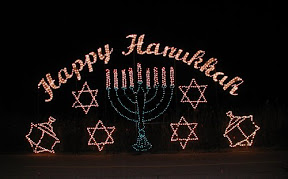
Hanukkah is celebrated for eight days, by performing a series of rituals, which started on December 4, 2007. The traditional Hanukkah greeting is “Happy Hanukkah”. Hanukkah is also known as the Festival of lights. Hanukkah can be celebrated anywhere from Late November to Early December and is the story of standing up for what you believe in. The most important of the Hanukkah rituals according to the Jewish is to light a single light each night for eight nights, with the number of lights to be lit is to increase my one every night.
There is also an extra light called Shamash, which means guard or servant and that light, is also lit each night. These lights can be candles or oil lamps. These lights should burn for at least a half hour after dark.
Three blessings are also recited during these eight days. When the candles are lit, the Hanerot Halalu Prayer is recited. Then after lighting the candles each night, but while still in site of the candles Ashkenazim sing the hymn Ma’oz Tzur. The Last day of Hanukkah is also known as Zot Hunukkah.
There are also other fun and traditions that go along with Hanukkah. Hanukkah Music is one great tradition. The most well know songs are “Dreidel, Dreidel, Dreidel” and “Chanukah, Oh Chanukah.” Some Hanukkah foods include, Potato Pancakes or fruit filled donuts, which are deep-fried in oil. And a very well known Hanukkah game played with a dreidel.
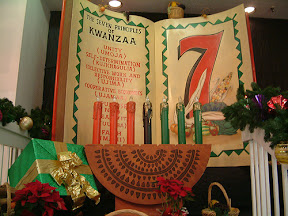
Kwanzaa is also a well-known Holiday in December. Kwanzaa is a weeklong Pan-African Festival taking place December 26th through January 1st. Kwanzaa consist of seven days of celebration including, candle-lighting, pouring of Libations, feasting and gift giving. Families celebrate by decorating their house with objects of art, colorful clothing and fresh fruit. A Kwanzaa ceremony could include drumming and musical selections, libations, and reading of the “African Pledge”, a candle-lighting ritual, artistic performances and a feast called Karamu.
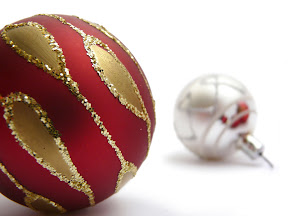
Finally yet importantly is Christmas. Christmas is celebrated December 25 and is a celebration of the birth of Jesus. Christmas is also known as the exchange of gifts among friends and family. Christmas also includes a Christmas tree decorated with lights and ornaments. Other popular holiday plants are holly, poinsettia, mistletoe, and Christmas cactus. A Nativity of Jesus is also included in Christmas and refers to the Christian belief that Messiah was born to the Virgin Mary. The Story of Christmas is based on biblical accounts out of the bible. With some of the most popular Christmas accounts be in Matthew, and Luke. The word Christmas originated from the word Christ’s Mass.
Teaching our children about our families’ culture, heritage and family traditions is so very important. Let us also remember that it is equally important that we should teach them about the different holidays and incorporate some other cultures’ traditions into our own Holiday celebrations.